
How to Choose the Right Softwood Cladding
In this blog post, WL West explore the exciting range of softwood cladding on the market and look at the key criteria for selecting the best cladding for your building project.
There are two different types of cladding – fresh sawn and machined – so first let’s examine the difference between these options.
Fresh-Sawn vs Machined Cladding: Understanding the Difference
Fresh Sawn Cladding
Fresh sawn cladding is supplied in its green state, meaning it contains a high moisture content and will season (dry out) over time. During this process, movement such as shrinkage, warping, and surface checking (small cracks) may occur. This is a natural characteristic of fresh sawn material and does not affect the structural integrity. Profiles include traditional waney-edge, feather-edge and square edge, which are ideal for a range of homes and buildings, including barns, garden rooms and garages.
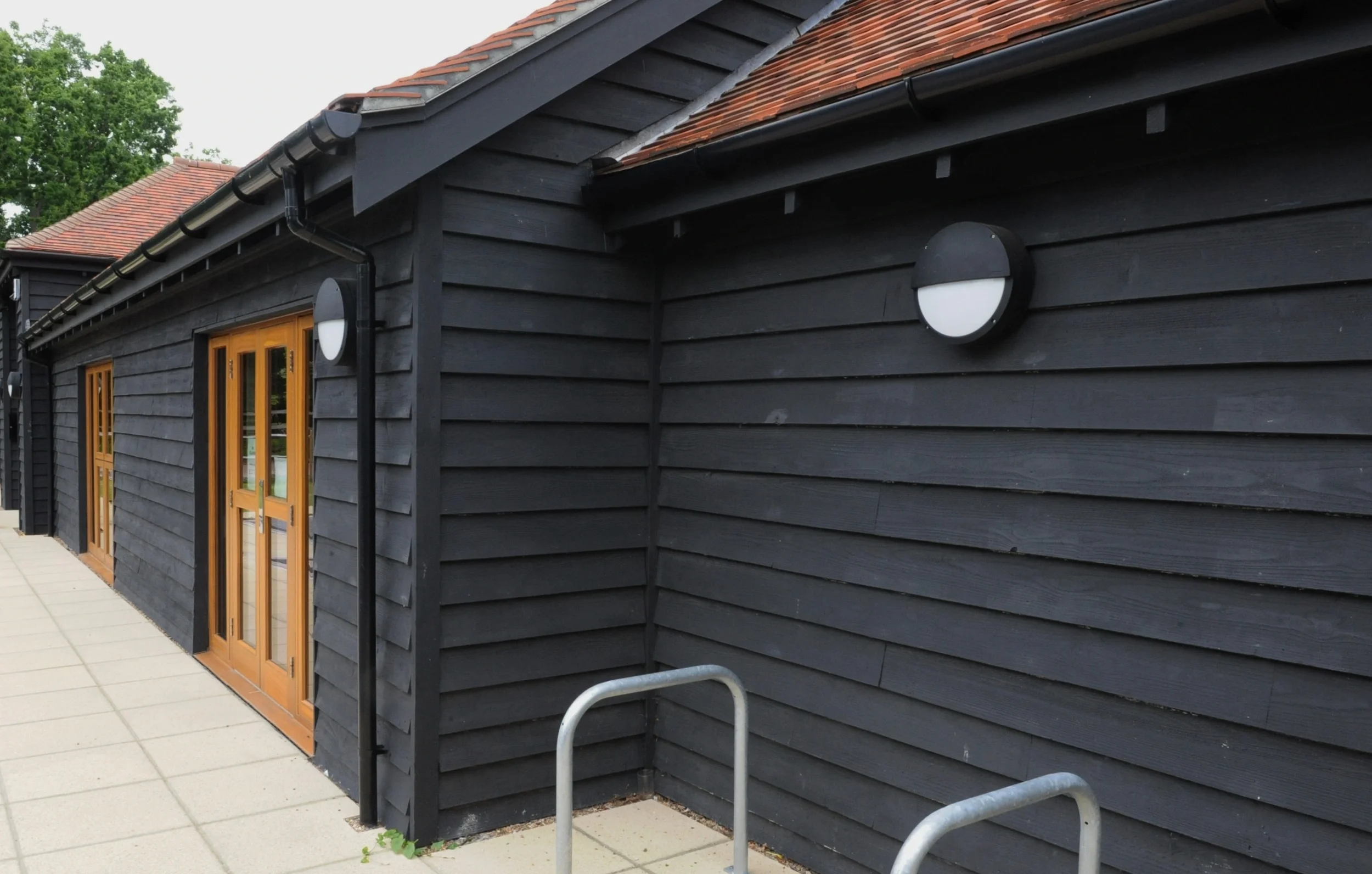
Fresh sawn feather-edge larch cladding for a village hall.
Machined Cladding
Common machined profiles include tongue and groove (TGV), shiplap, and halflap, which interlock or overlap for a tight, water-proof seal. Machining ensures that each board has the same dimensions and profile, resulting in a more uniform appearance and easier installation. As the timber is kiln-dried it can offer better dimensional stability compared to fresh sawn options. A versatile choice, machined cladding can be used internally or externally and the range of profiles suit both modern or traditional properties.
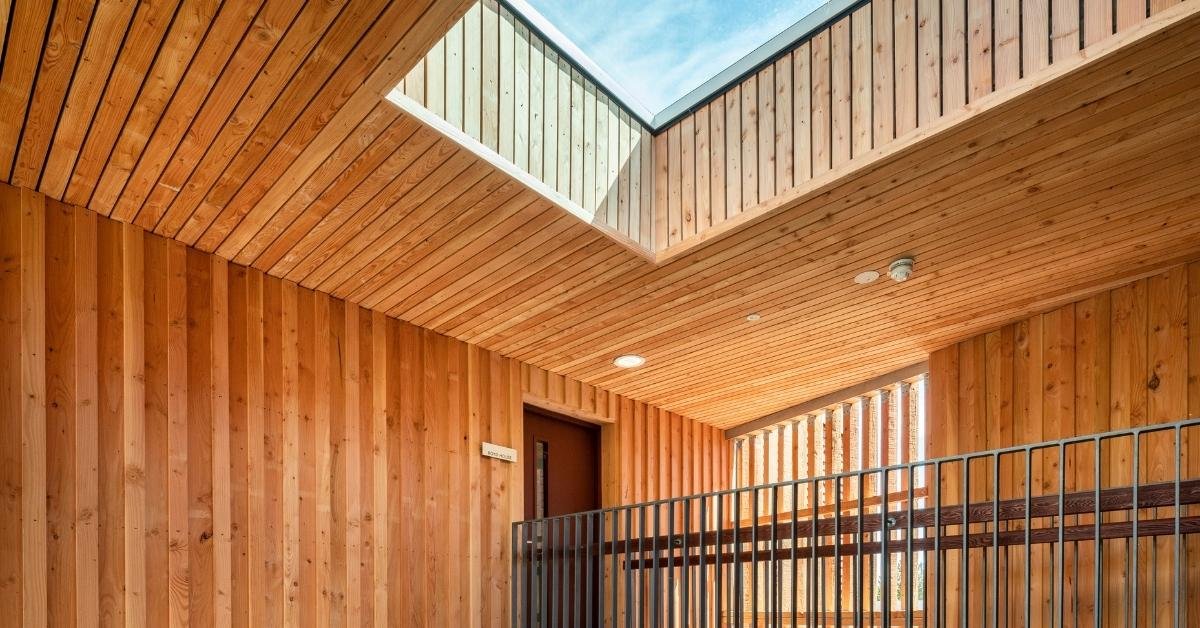
Machined douglas fir cladding for Churchill College, Cambridge. Read more here.
Cladding Installation Guidelines
To ensure a long-lasting and stable installation, we recommend:
Fixings: Use stainless steel nails or screws to prevent staining and corrosion.
Pre-drilling: Recommended to minimise splitting.
Follow any guidelines on overlapping/spacing etc. to allow for the natural expansion and contraction of the timber.
Ventilation: Ensure proper airflow behind the cladding to prevent moisture buildup.
Our expert team have detailed all the aspects to consider when choosing softwood cladding, take a look at our comprehensive list below.
7 key considerations when choosing softwood cladding
Durability & Natural Resistance
Douglas Fir: Moderately durable. Has good resistance to decay but benefits from a protective treatment in exposed areas. Contains resin, which helps with weather resistance. May require treatment or regular maintenance for long-term durability.
Larch: More durable than Douglas Fir. Has a higher resin content, making it naturally more resistant to moisture, decay, and insect attack.
Western Red Cedar: The most durable of the three. Naturally resistant to decay, insect damage and moisture, making it ideal for cladding with minimal treatment.
Stability & Movement
Fresh sawn cladding will be less stable and more prone to movement than kiln dried machined cladding. The higher moisture content of the green timber will gradually reduce as it air dries, and this will likely result in some shrinkage and cupping in the less stable timber species.
Douglas Fir: Fairly stable but prone to some movement as it dries. Can develop surface checking (small cracks).
Larch: Moderate stability but more prone to splitting than Douglas Fir due to its density. Careful installation is needed.
Western Red Cedar: The most stable of these softwood options, with minimal movement, making it a great choice for cladding.
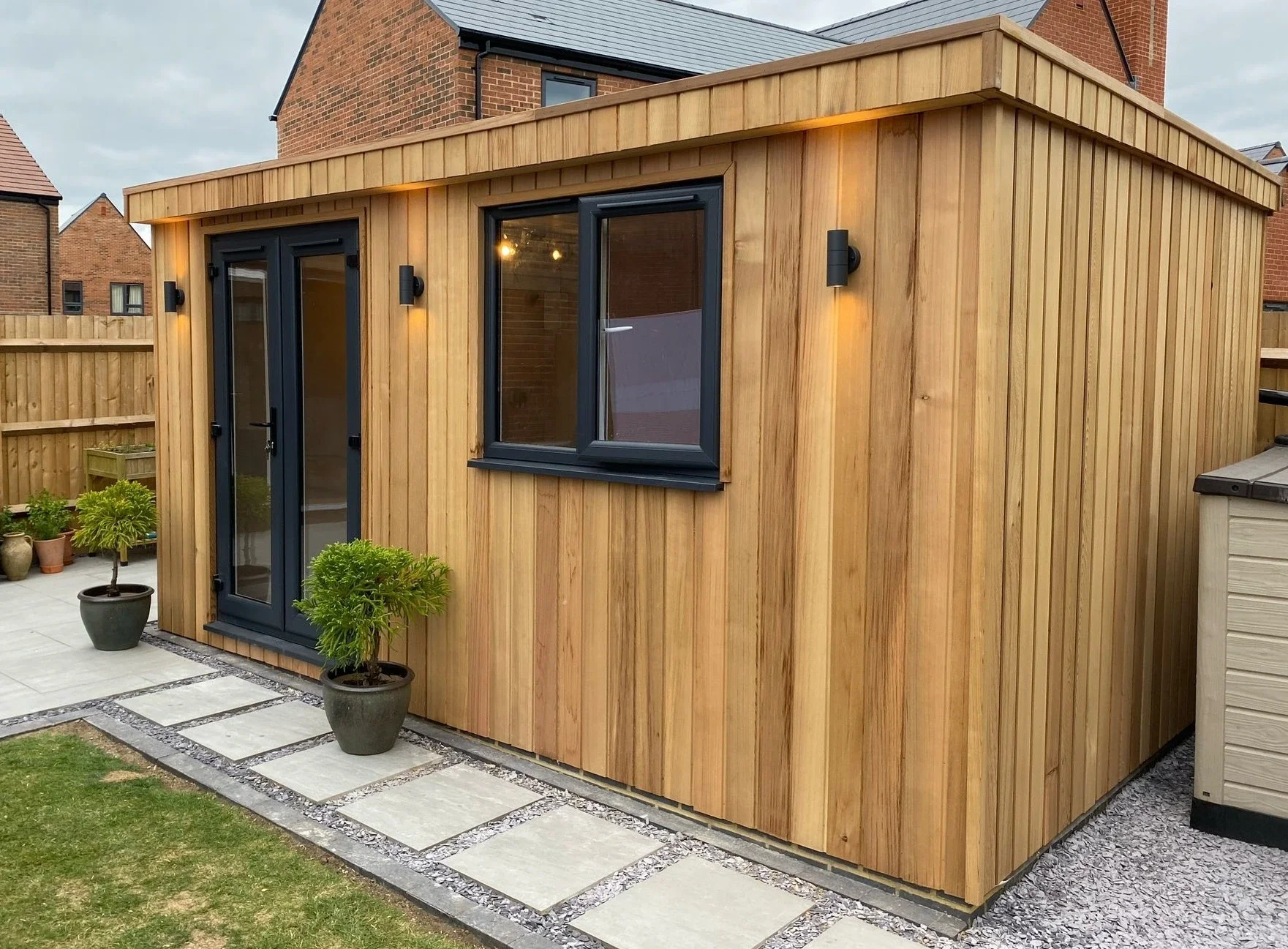
Machined western red cedar cladding for a garden room project.
Workability
The harder the timber species is to work with, the longer it is likely to take to install the cladding, which in turn impacts on the cost of the project.
Douglas Fir: Relatively easy to work with, though it can be resinous.
Larch: Harder and denser than Douglas Fir, making it more challenging to work with. Its tendency to split needs to be considered.
Western Red Cedar: The easiest to work with due to its softness and fine grain.
Appearance
With UV exposure, all untreated timber will weather to a silvery-grey over time. Treating the timber with a quality UV protection oil can help maintain the original colour for longer if desired.
Douglas Fir: Unique pinky/apricot ranging to pale reddish-brown tones with defined growth rings.
Larch: Warm golden to reddish-brown, with varied grain patterns and small knots.
Western Red Cedar: Very distinctive light brown to reddish tones. Homegrown cedar is more knotty than Canadian timber. If a surface treatment is required, the absence of resin within the timber makes it an ideal choice for painting or staining.
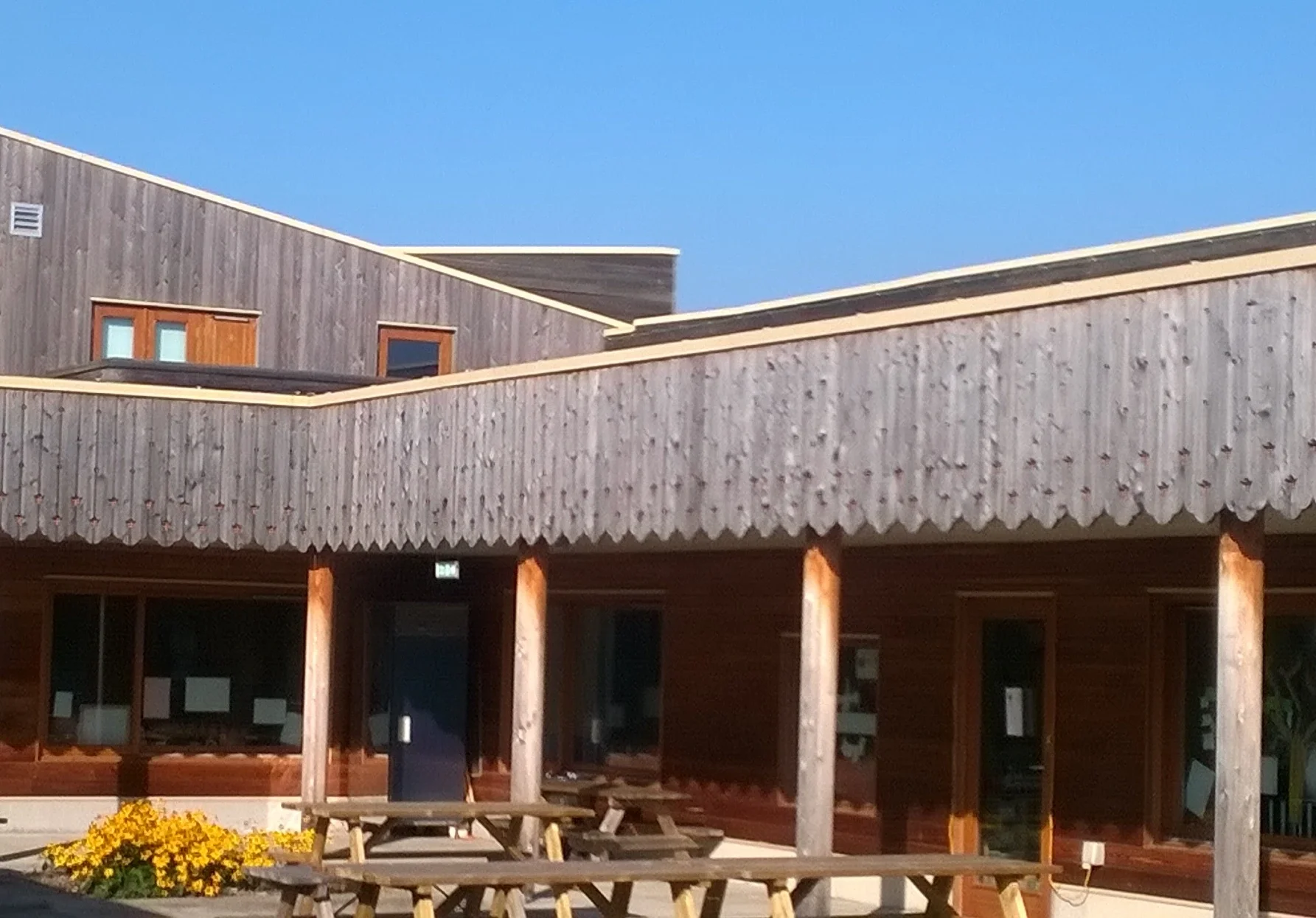
Weathered larch cladding on a school building.
Cost & Availability
Douglas Fir: Generally, the most affordable and widely available. Our fresh sawn local Douglas Fir comes from a responsibly managed local estate in West Sussex.
Larch: Mid-range in cost, though high-quality larch can be more expensive. WL West Timber use British Larch for our fresh sawn cladding profiles (eg. Feather-edge) and Canadian Larch for the machined profiles (eg. TGV).
Western Red Cedar: The most expensive due to its durability and popularity, but its longevity may offset the higher upfront cost. We have two options for our customers: homegrown Western Red Cedar for fresh sawn cladding and Canadian Western Red Cedar for machined cladding profiles.
Lifespan
There is a significant difference in the lifespan of different timber species, which should be taken into account in your cost-benefit analysis of the options. The longer lasting species may well justify their higher cost, as the cladding need not be replaced as frequently.
Douglas Fir: 15-30 years
Larch: At least 30 years
Western Red Cedar: 30-60 years
Sustainability
Last but not least, you will no doubt want to consider the sustainability and carbon footprint of your cladding. Check that your timber cladding supplier is a member of a body like Timber Development UK. Members of TDUK (like WL West) are signatories to the mandatory Responsible Purchasing Policy which is audited annually and proves the legality of the timber that the company supplies.
WL West can source fresh sawn Douglas Fir, Larch and Western Red Cedar from well-managed British woodlands. In fact, our PEFC certified Douglas Fir comes from an estate just a few miles down the road from our HQ, making the carbon footprint of the timber very low!
Machined cladding often comes from Canada, so although the timber is from responsibly managed forests, it does have to travel a long distance to the UK.
The Ultimate Softwood Cladding Comparison Guide
| Consideration | Douglas Fir | Larch | Western Red Cedar |
|---|---|---|---|
| Durability & Natural Resistance | Moderately durable; good decay resistance due to resin. Benefits from a protective treatment in exposed areas. | More durable than Douglas Fir; higher resin content provides natural resistance to moisture, decay and insect attack. | Most durable of the three; naturally resistant to decay, insect damage and moisture with minimal treatment required. |
| Stability & Movement | Fairly stable but can move as it dries; may develop surface checking (small cracks). | Moderate stability but more prone to splitting due to density; careful installation recommended. | Most stable option with minimal movement; excellent for cladding. |
| Workability | Relatively easy to work with, though can be resinous. | Harder and denser than Douglas Fir; more challenging to work; tendency to split should be considered. | Easiest to work with thanks to softness and fine grain. |
| Appearance | Pinky/apricot to pale reddish-brown with defined growth rings; untreated timber weathers to silver-grey. | Warm golden to reddish-brown with varied grain and small knots; untreated timber weathers to silver-grey. | Light brown to reddish tones; homegrown is more knotty than Canadian; low resin makes it ideal for painting/staining; untreated timber weathers to silver-grey. |
| Cost & Availability | Generally the most affordable and widely available; fresh sawn local supply available (e.g., West Sussex estate). | Mid-range cost; British Larch for fresh sawn profiles (e.g., feather-edge); Canadian Larch for machined profiles (e.g., TGV). | Most expensive due to durability/popularity; homegrown (fresh sawn) and Canadian (machined) options; longevity may offset upfront cost. |
| Lifespan | 15–30 years. | At least 30 years. | 30–60 years. |
| Sustainability | Can be PEFC certified and locally sourced from well-managed British woodlands; very low transport footprint when local. | Available from well-managed British woodlands; some machined options imported from Canada. | British-grown and Canadian-sourced options from responsibly managed forests; Canadian imports have a longer transport footprint. |
Which softwood cladding should you choose for your project?
If you need a balance of affordability and durability, Larch is a solid choice. If you want longevity with minimal maintenance, Western Red Cedar is the best but pricier. If budget is a key concern, Douglas Fir offers a good compromise but may require more maintenance.
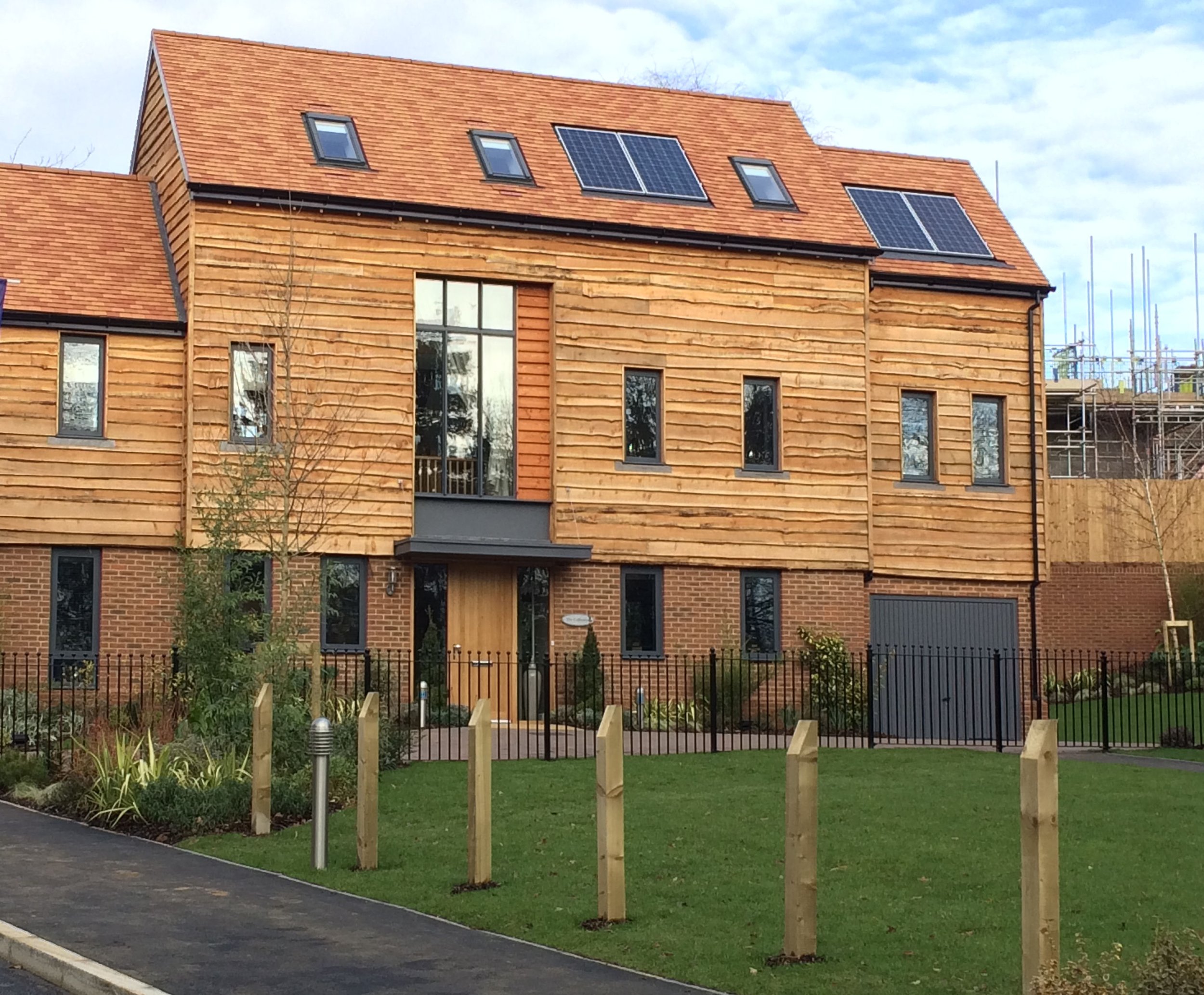
WL West Timber Waney-edge cladding for David Wilson Homes in Godalming.
Frequently asked questions
-
If you’re looking for a balance between affordability and durability, Larch is a strong all-round choice.
-
Western Red Cedar offers the greatest longevity (30–60 years) with minimal maintenance needs.
-
Douglas Fir is usually the most affordable, but it may require more frequent maintenance and treatment to maximise its lifespan
-
Douglas Fir: 15–30 years, Larch: 30+ years, Western Red Cedar: 30–60 years (depending on treatment and care).
-
Yes — untreated cladding will gradually weather to a silvery-grey. A UV protection oil can help preserve the original tones.
-
Western Red Cedar is the easiest to work with thanks to its softness and fine grain. Larch is denser and more prone to splitting, so it requires careful handling.
-
Yes — British-grown timber like local Douglas Fir or Larch has a much lower carbon footprint than imported alternatives.
-
Absolutely — all species can be treated, but Western Red Cedar’s low resin content makes it ideal for painting or staining.
Shop WL West Timber Cladding
We offer a wide range of timber species and profiles to suit any style of property, garden room or garage. Take a look at our webshop for full details or contact us for more information.
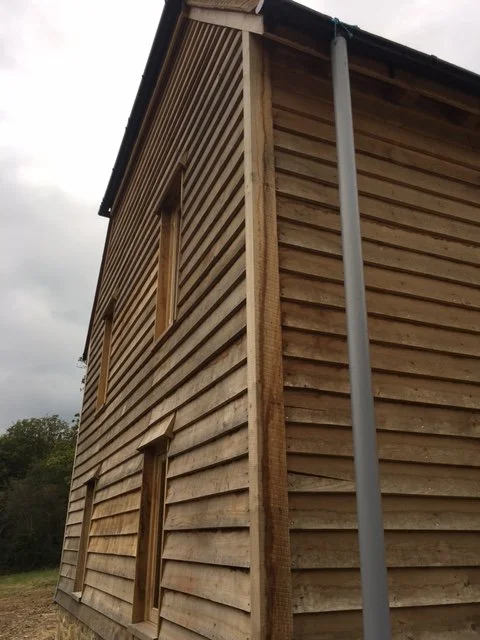
£5.45 (Ex VAT) £6.54 (inc VAT) per linear metre. Minimum order - 65 linear metres.
The beauty, strength and natural resistance to decay of European Oak make it an ever popular choice for external cladding. Oak can withstand harsh weather conditions and maintenance is relatively low as it requires minimal cleaning and oiling. Although it is generally more expensive compared to softwoods like Western Red Cedar and Douglas Fir, its durability makes oak cladding a worthwhile investment.
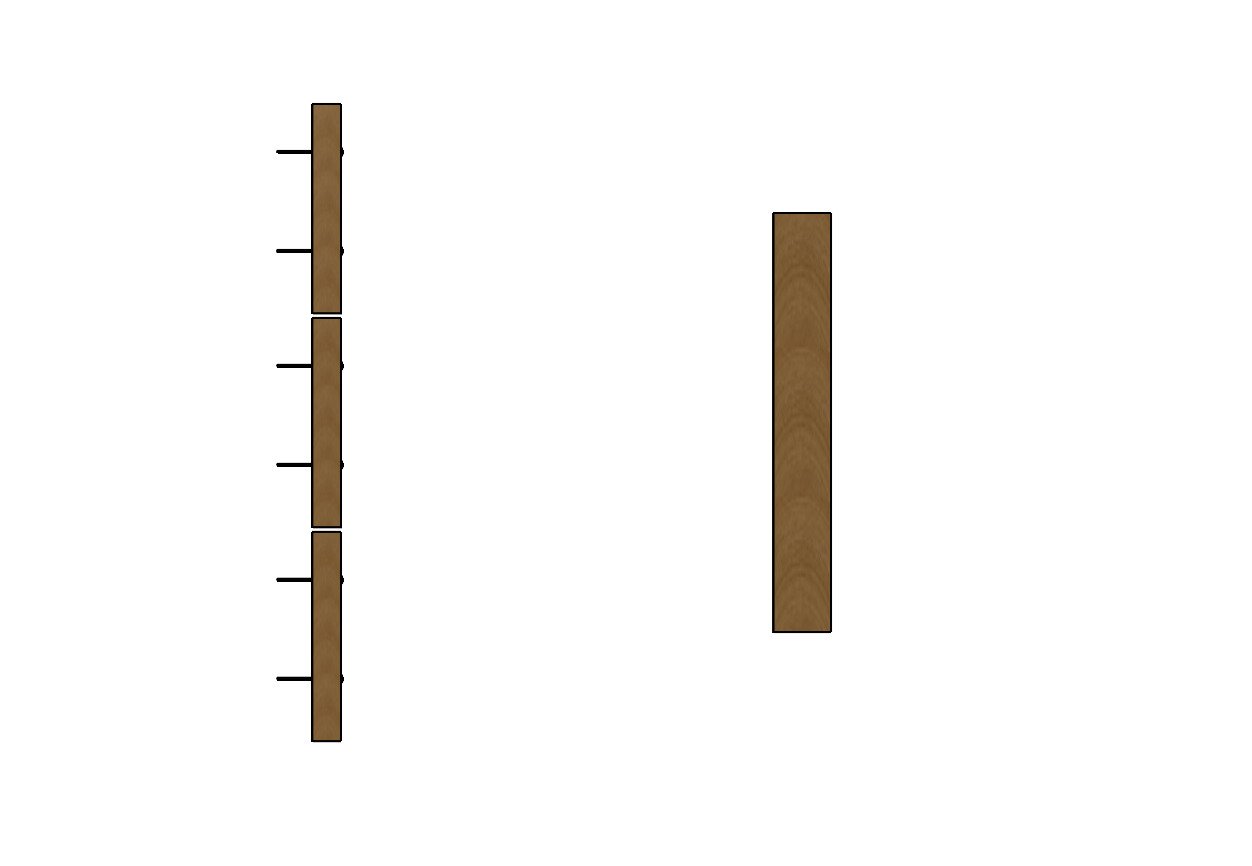
Feather-edge cladding (also known as weatherboarding) is a time-honoured style of external timber cladding often used for barn conversions, oak framed buildings, and both new build and older rural properties. The boards are cut on the diagonal to produce a tapered board that is overlapped when fitted. Feather-edge cladding is designed to be laid horizontally and it is recommended that the fine sawn face of the board is exposed. As it is fresh sawn, the cladding will shrink after installation. It is therefore important to read our installation and fixings information.
Our oak is sourced from responsibly-managed and sustainable woodlands in France. We cut all our cladding to order, allowing us to maintain control and produce a top-quality end product.
Price and Delivery
Price is inclusive of VAT.
Price is £6.54 (inc VAT) per linear metre (LM). Minimum order quantity is 65LM.
For trade, larger orders and custom sizes, please contact the Sales Team to discuss.
Local delivery available: calculated at checkout, if you are out of area please call for a delivery quote
CUT TO ORDER PLEASE ALLOW UP TO 20 working days (although orders are normally processed before this)
if you would like an up to date lead time please give us a call